
Picture this: a ship circling the globe without ever stopping for fuel. A submarine hidden beneath the ocean for months. An aircraft carrier moving with enough energy to power a small city.
That’s what nuclear power makes possible in the Navy. It may sound futuristic, but it’s been reality for decades.
And here’s something that surprises many students who discover this path: you don’t need to know anything about nuclear science to be part of it. The Navy trains you from the ground up. What matters is curiosity, technical ability, and the drive to lead.
In this article, we’ll walk through what nuclear power is, how it works, how the Navy uses it, and why it’s one of the cleanest, safest, and most important energy sources in the world.
Put simply, nuclear power is about turning matter into energy. Einstein showed us in his famous equation, E = mc², that mass and energy are two sides of the same coin. A small amount of mass can be transformed into a huge amount of energy. But how does that actually happen inside a reactor?
The process starts with the fuel: enriched uranium. Each uranium atom has a heavy nucleus packed with protons and neutrons. Most of the time, that nucleus is stable. But when a neutron from the reactor collides with it and gets absorbed, the uranium atom becomes unstable.
That instability can’t last. The atom suddenly splits apart — a process called fission. When it does, three important things happen:
It releases fission products (basically smaller atoms, like krypton or barium).
It throws off extra neutrons that can strike other uranium atoms and cause fissions of their own.
It gives off energy in the form of heat and radiation.
That’s the chain reaction. One atom splits, triggers others, and the process continues. The brilliance of a reactor is that it controls this reaction, keeping it steady instead of letting it run wild. Control rods that absorb neutrons, water that slows neutrons down, and careful reactor design all work together to balance the reaction.
This is where Einstein’s idea shows up. If you carefully add up the mass of the uranium atom and the neutron before fission, and then compare it to the mass of the fission products and neutrons afterward, the totals don’t match. The output weighs slightly less.
That missing mass didn’t just vanish. It turned into energy — just as Einstein predicted. In other words, mass is just another form of energy — and nuclear fission is the process that unlocks it.
The result of all this is heat. An enormous amount of it. This heat can be harnessed to make electricity to power your home, or it can be used to drive the most powerful warships in the history of the world.
So how do you take all this heat from fission and turn it into a moving warship? Think of the process this way.
Primary loop: The reactor heats pressurized, subcooled water called primary coolant. Think of it like a giant kettle that never boils over. Because it goes through the reactor, primary coolant is radioactive and kept isolated from the rest of the systems.
Heat transfer: Primary coolant flows through pipes inside a steam generator, warming a second, separate loop of water. The two loops never mix, but the heat from the reactor is transferred to the non-radioactive water in the second loop.
Steam cycle: The second loop boils into steam in the steam generator, sending steam down massive pipes to the engine room. The Rankine Cycle is used in naval nuclear power plants, which you will learn about if you ever have the privilege of taking a thermodynamics class.
Turbines: Steam rushes through turbines that spin to create power. Some turbines turn the ship’s propellers for propulsion. Others generate electricity for every system onboard. On aircraft carriers, the steam from the reactor is used for applications such as flight operations.
Condensing: After going through the turbines, the steam cools back into water and starts the Rankine Cycle all over again.
So in a nutshell the chain looks like this:
It looks simple. But making it work safely at sea takes some of the best engineering in the world.
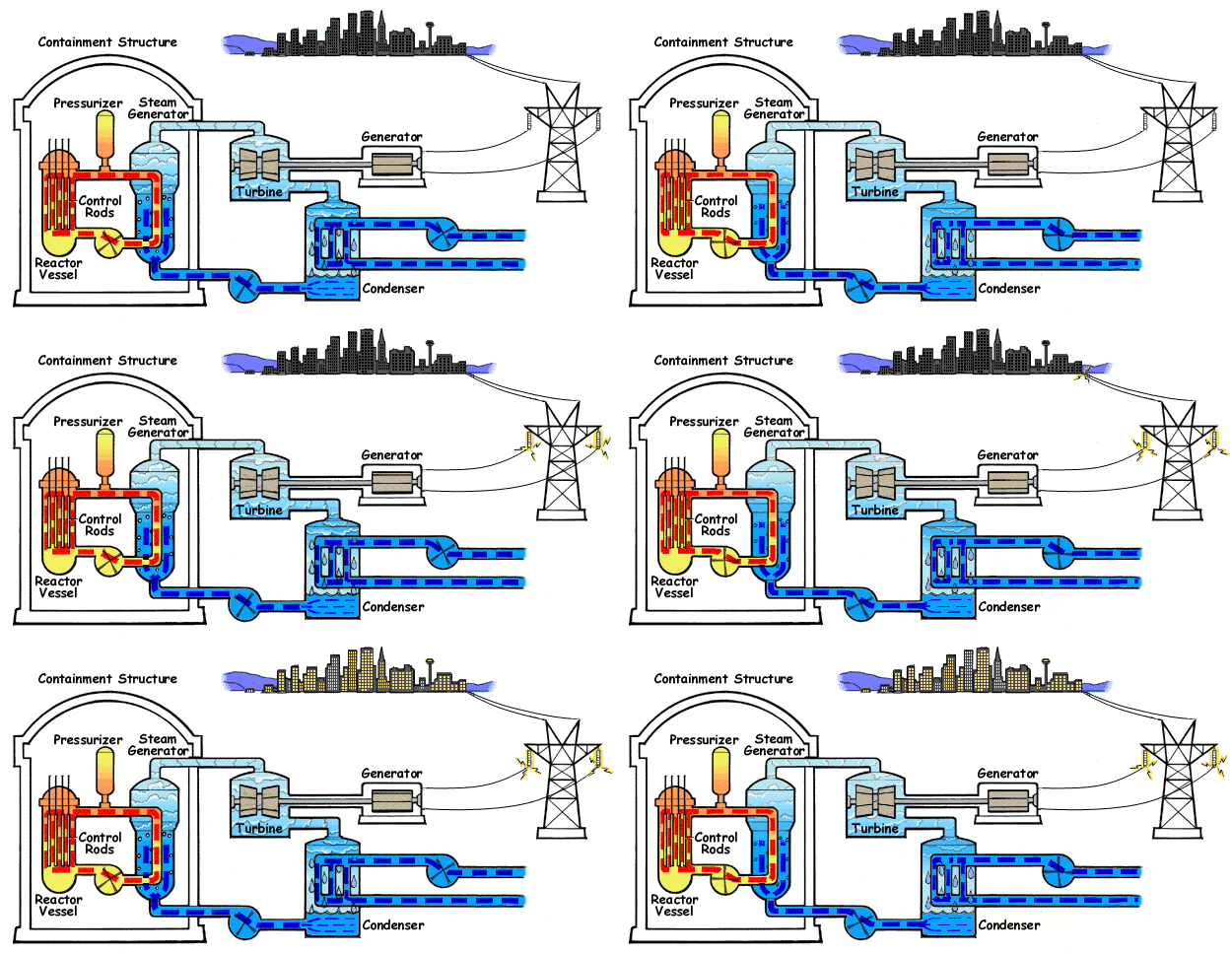
How a pressurized water reactor works. On warships we harness steam for propulsion, electricity, and more!
Why go through the trouble of building nuclear reactors into ships? A few reasons stand out.
Endurance: Carriers and submarines can run for decades without refueling, and can remain at sea pretty only limited by the amount of food onboard.
Energy density: A few pounds of uranium pack as much energy as thousands of barrels of oil. That frees up space for aircraft, weapons, and supplies.
Independence: No need to rely on fuel convoys. Nuclear ships can operate anywhere on the planet, anytime.
Stealth: Nuclear submarines can disappear beneath the ocean and stay hidden. Sometimes for months.
The Navy doesn’t use nuclear power just because it’s efficient. It uses it because no other fuel source offers the same advantage.
Nuclear power isn’t only at sea. About 20% of America’s electricity comes from civilian nuclear plants. The principle is the same: controlled fission heats water, creates steam, and spins turbines.
The difference is scale and design. Civilian plants are massive and stationary. Navy reactors are compact, rugged, and built to withstand the stresses of combat and the ocean.
Run a Navy reactor, and the civilian plants on land make sense too. The systems are that similar. That’s why the training is so valuable, and why nuclear-trained personnel from the navy form a large segment of the civilian nuclear workforce.
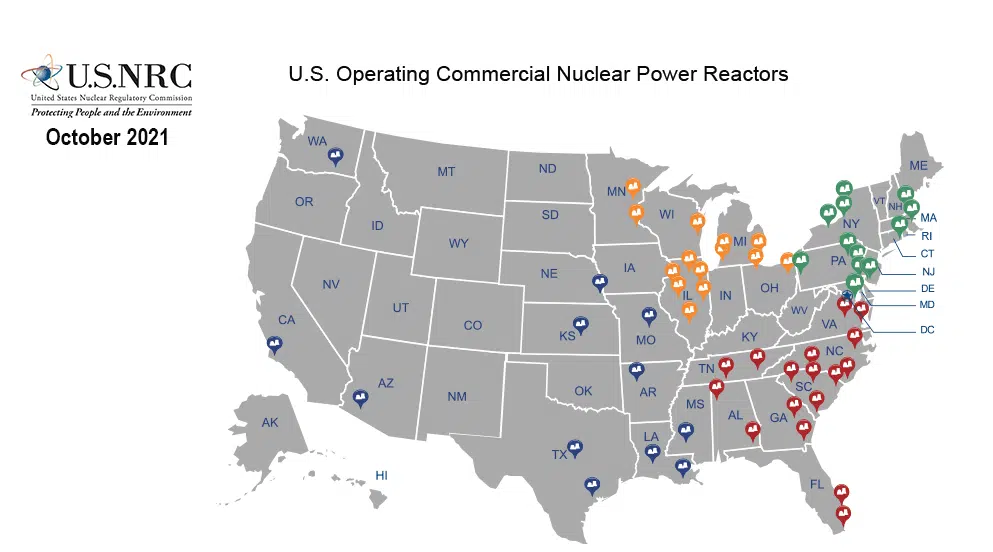
Say the word “nuclear,” and a lot of people immediately think of accidents. But here’s a fact you won’t often hear: the U.S. Navy has run nuclear reactors for over 70 years without a single reactor accident.
That safety record comes from:
Multiple backup systems
Strict design standards and quality assurance
A culture of safety where every operator is trained, retrained, and constantly evaluated.
Oversight from Naval Reactors, the Navy’s dedicated nuclear safety and engineering office.
It’s easy to forget that while the world debates energy, 21 year old sailors (overseen by 24 year old officers) have been quietly running reactors safely for decades.
America's nuclear ships have safely steamed hundreds of millions of miles. Across every ocean. In every environment. Zero accidents. That’s not luck — it’s design and discipline.
Technology doesn’t run itself. Behind every reactor is a team of officers and sailors. Navy nuclear officers are selected, trained, and trusted to lead those teams.
What sets them apart:
Prestige: Only a small number of naval officers are chosen to become nuclear-trained.
Leadership: Depending on where they are in their career, officers lead divisions, departments, and ships and make real-time decisions that matter.
Mission-Oriented: While the senior enlisted is primarily tasked with running the ship, officers are responsible for fighting the ship. Officers are entrusted by the President with a significant amount of responsibility, and are ultimately in charge. They are responsible and accountable for accomplishing the assigned mission, and make critical decisions on how to operate systems under their cognizance and fight the ship both when operations are going smoothly and when unexpected events happen.
Trust: They’re responsible for billion-dollar warships and the lives of everyone aboard.
Opportunity: Through NUPOC, the Navy invests in you upfront, paying you while you finish college and preparing you for the type of leadership experience that most graduates don't get until far later in their career.
Very few groups are this selective and have a reputation as strong as that of the nuclear navy.
Ask any nuclear-trained officer, and they’ll tell you it changes you. You learn to lead. You learn to solve problems under pressure. You learn to care about details and processes. And you carry responsibility few people will ever experience.
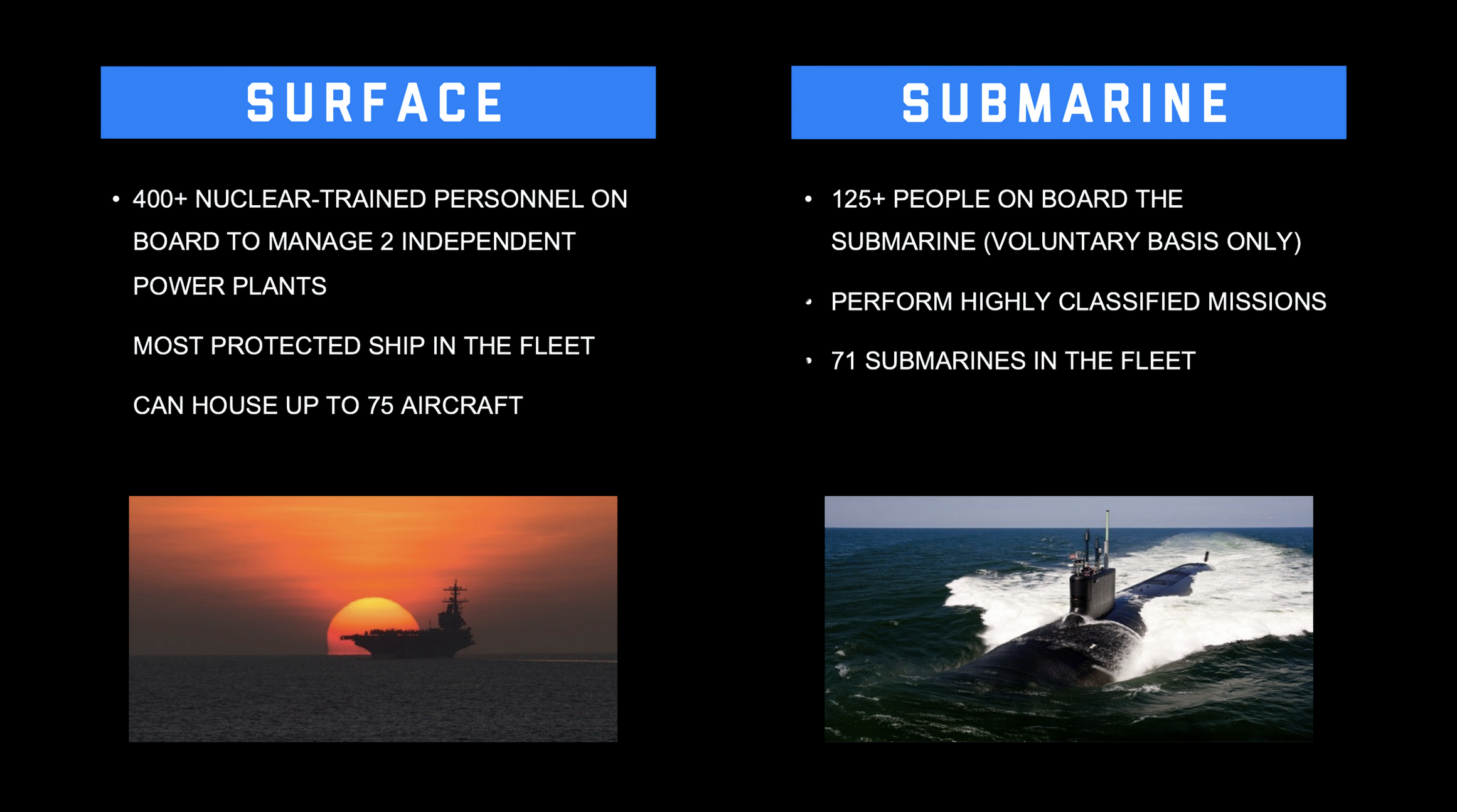
Nuclear power is clean, powerful, and essential. For the Navy, it provides unmatched strength and freedom at sea. For the officers who oversee it, it provides something even greater: responsibility, leadership, competence, and respect.
Are you someone who:
If that sounds like you, and you meet our eligibility requirements, the Navy's Nuclear Propulsion Officer Candidate (NUPOC) program is the place to start. Contact the Navy's College Engineering Programs and see below for helpful links on the program details.
Disclaimer: navynupoc.com is not an official U.S. Navy or Department of War website. It is an independent resource created by a representative from the Navy's Collegiate Engineering Programs to inform about the incredible opportunities available in the NUPOC program. To be connected with a Navy NUPOC recruiter, click here.

